Catamaran vs Monohull for Charter in Croatia: Which Suits Your Crew?
•
Sandro S.Choosing between a catamaran and a monohull is the first decision most charter crews face when planning a catamaran vs monohull charter in Croatia. With over 2,400 monthly searches for this exact question, it"s the defining decision for your sailing vacation. Croatia"s Adriatic fleet includes 264 catamarans and 868 sailing yachts — both proven performers. But they deliver fundamentally different experiences. This guide breaks down what matters: stability, space, cost, sailing feel, and how Croatian conditions favor each type.
Key Takeaways
- Catamarans offer superior stability and 30-50% more living space, but cost 30-50% more to charter and nearly double the marina fees
- Monohulls deliver authentic sailing performance, lower costs, and easier marina access — but heel in strong wind and offer tighter accommodations
- Catamarans suit families, non-sailors, and comfort-first crews; monohulls suit traditional sailors and budget-conscious groups
- In Croatia, catamarans" shallow draft (1.2m) lets you anchor more often, potentially offsetting higher marina costs
- Neither is objectively "better" — your crew"s priorities, budget, and sailing goals determine the right choice
What Makes a Catamaran Different
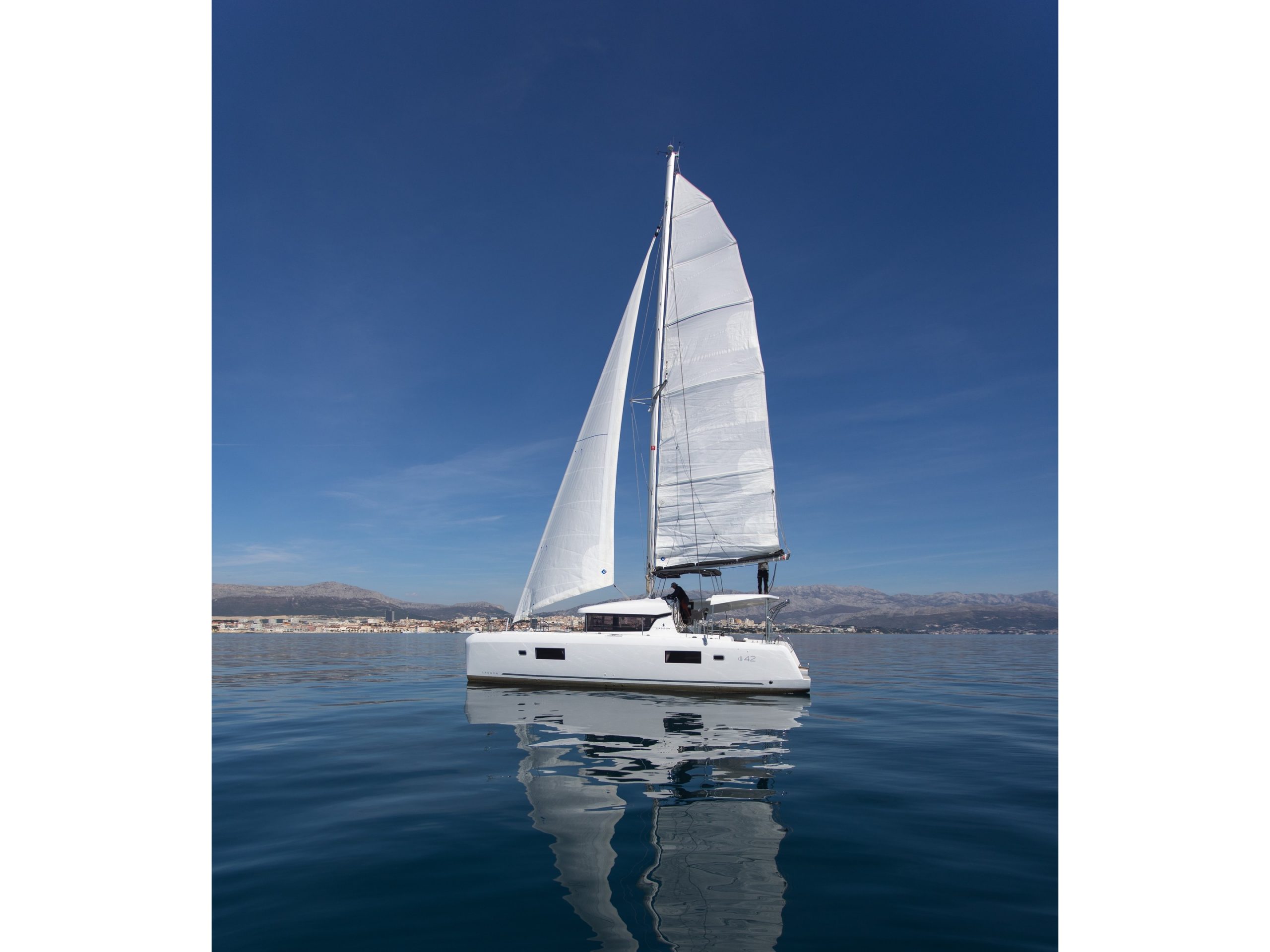
A catamaran has two parallel hulls instead of one. This fundamental design creates four advantages that define the type. First, you get unmatched stability — the wide beam (typically 7+ metres) means minimal heel. Most guests never touch the cabin sole during normal sailing. Second, the twin-hull design creates 30-50% more usable living space than a monohull of similar length. A Lagoon 42 feels roomier than many 50-foot monohulls.
Third, shallow draft (typically 1.1-1.3 metres) opens anchoring options a monohull can"t reach. The Adriatic has countless protected bays accessible only to shallow-draft vessels. Fourth, twin engines provide redundancy — lose one engine and you still motor to port under power. A monohull"s single engine is your only fallback.
The trade-offs are real. Catamarans cost more upfront and cost more to charter. Marina fees are charged by beam width — a 7.7-metre catamaran pays nearly double a 4.4-metre monohull"s fee. Catamarans also don"t heel, which some experienced sailors miss; the traditional sailing dynamic is gone. And in light wind, the extra weight and windage mean slightly slower performance upwind.
What Makes a Monohull Different
A monohull has a single hull with a keel for stability. It heels (leans) in wind — sometimes dramatically in strong gusts. For many sailors, this heel is the essence of sailing. The boat works with the wind and sea instead of floating above them. Monohulls are more intuitive for traditional sailors; the feel and feedback are immediate and familiar.
Monohulls cost 30-50% less to charter than comparable catamarans. Marina fees are proportionally lower because beam is narrower (4-4.5 metres typical). The Bavaria Cruiser 46, for example, costs €2,500-€4,500/week in shoulder season versus €3,000-€6,000 for a Lagoon 42. The charter market is larger, so availability is usually better. More operators, more choice, more flexibility.
Monohull trade-offs include less usable space (especially on deck), deeper draft (1.8-2.0 metres) which limits anchoring options, and heeling in strong wind which some guests dislike or which causes seasickness. Single engine means no redundancy.
Experience Comparison: Catamaran vs Monohull Charter in Croatia
| Factor | Catamaran | Monohull |
|---|---|---|
| Comfort (Heeling) | Minimal heel, level platform, no seasickness concern | Significant heel upwind, can cause discomfort |
| Sailing Feel | Stable and secure, less "sailing" feedback | Dynamic, responsive, traditional sailing experience |
| Deck Space | Massive foredeck, cockpit between hulls, excellent lounging | Narrower foredeck, less deck real estate |
| Cabin Space | Wide cabins, better headroom, more storage | Narrow cabins, lower headroom, tighter storage |
| Charter Cost | €3,000–€9,000/week depending on season | €2,500–€7,000/week depending on season |
| Marina Fees | €35–€55/night (7.7m beam) | €20–€35/night (4.4m beam) |
| Anchoring Flexibility | Shallow draft (1.2m), can anchor most bays | Deeper draft (1.9m), fewer anchoring options |
| Best For | Families, non-sailors, comfort-first groups | Experienced sailors, budget-conscious groups |
| Docking | Wide beam challenging, twin engines help | Narrow beam easier, single engine + bow thruster |
The Numbers: Catamaran vs Monohull Specs
Let"s compare two industry standards regularly chartered in Croatia: the Lagoon 42 (catamaran) and the Bavaria Cruiser 46 (monohull). Both sleep four to six guests comfortably.
| Specification | Lagoon 42 (Cat) | Bavaria Cruiser 46 (Mono) |
|---|---|---|
| Length Overall | 12.80 m | 14.27 m |
| Beam | 7.70 m | 4.37 m |
| Draft | 1.25 m | 1.95 m |
| Displacement | 12,350 kg | ~11,900 kg |
| Engines | 2× 30 HP diesel | 1× 57 HP diesel + bow thruster |
| Cabins / Heads | 4 / 4 | 4 / 2–3 |
| Sail Area | 87 m² | ~89 m² |
| Charter Rate (Peak) | €5,000–€9,000/week | €4,000–€7,000/week |
| Charter Rate (Shoulder) | €3,000–€6,000/week | €2,500–€4,500/week |
| Marina Fee/Night | €35–€55 | €20–€35 |
The gap widens over a full week. Charter difference: €1,000–€2,000. Marina fees: €105–€140 difference for seven nights. But the catamaran"s shallow draft means more free anchoring nights, which narrows the financial gap quickly.
When to Choose a Catamaran
Your crew includes non-sailors or comfort-first guests. No heeling, level platform, and massive social space (cockpit, foredeck) make a catamaran ideal for guests who"ve never sailed or prefer relaxation over performance. Guests often tell us that catamarans are "the safest feeling" — and that matters.
Seasickness is a concern. The stability of a catamaran nearly eliminates seasickness risk. A monohull"s heel and dynamic motion trigger nausea in sensitive guests. If anyone in your crew is prone to motion sickness, a catamaran is the better choice.
You want maximum interior living space. A catamaran"s width translates to wider cabins, better headroom, and more comfortable galley and saloon. If your crew values comfort over traditional sailing feel, the space advantage is real.
You plan to anchor frequently. Croatia"s protected bays and shallow anchorages (1.0–1.5m) favour shallow-draft catamarans. If you want to avoid marina fees and experience true Adriatic solitude, a catamaran"s draft is a decisive advantage.
When to Choose a Monohull
Budget matters. Monohulls cost 30-50% less to charter and keep marina fees lower. Over a week, the savings are substantial — €1,000+ in some cases. If your crew is cost-conscious, a monohull stretches your charter budget further.
Your crew are experienced sailors. If your team knows how to trim sails, read pressure, and work upwind, a monohull delivers the sailing experience you want. The heel, feedback, and performance are engaging. Traditional sailors often view monohulls as "real sailing." Read our Bavaria Cruiser 41 review for a popular example.
You want proven availability and choice. Croatia"s fleet is 65% monohulls (868 yachts vs. 264 catamarans). More operators, more competition, more options for your dates and price point. Compare models in our best 46-foot sailing yachts roundup.
Marina berths are easier to secure. Narrow beam (4–4.5m) fits into more marina slots. Many Mediterranean ports prioritise narrow vessels because dock space is premium. A monohull"s slim profile is genuinely advantageous in popular harbours.
Croatia-Specific Considerations
Bura Wind and Adriatic Conditions: The Bura (cold, northeasterly wind) can gust 30-40 knots in winter and shoulder seasons. Monohulls heel dramatically in these conditions; some guests find it uncomfortable. Catamarans stay level. But if you"re an experienced sailor, the monohull"s performance in strong wind is exhilarating.
Marina Concentration: Croatia"s main charter bases (Split, Trogir, Šibenik) have excellent marina infrastructure. But berth space is competitive in July-August. Catamarans" wide beam fills a slip, so availability may be tighter. Monohulls slot into more available berths.
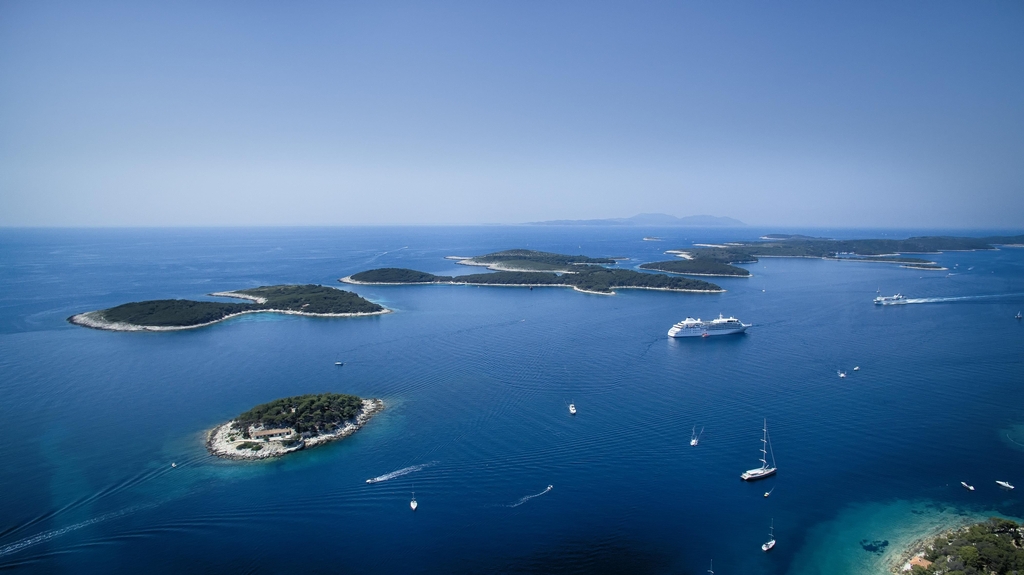
Anchoring Paradise: Croatia"s Adriatic has 1,200+ islands and countless protected bays. Catamarans" 1.2m draft unlocks shallow anchorages (Pakleni Islands, Ravni Žal, Korčula"s south bays) that monohulls can"t reach. This is catamarans" strongest advantage in this region.
Summer Tourism: July and August bring intense crowding. Monohulls" lower charter cost attracts budget crews, so availability drops. Catamarans are pricier but may have better availability. Shoulder seasons (May-June, September-October) offer the best value and conditions for both types.
Frequently Asked Questions
Are catamarans slower than monohulls?
In strong wind, monohulls are typically faster upwind because they point slightly higher and benefit from heel-induced stability. Catamarans are competitive downwind and in light air. For cruising in Croatia, the difference is negligible — you"re not racing. Both reach your next anchorage with ease.
Can a catamaran fit in most Croatian marinas?
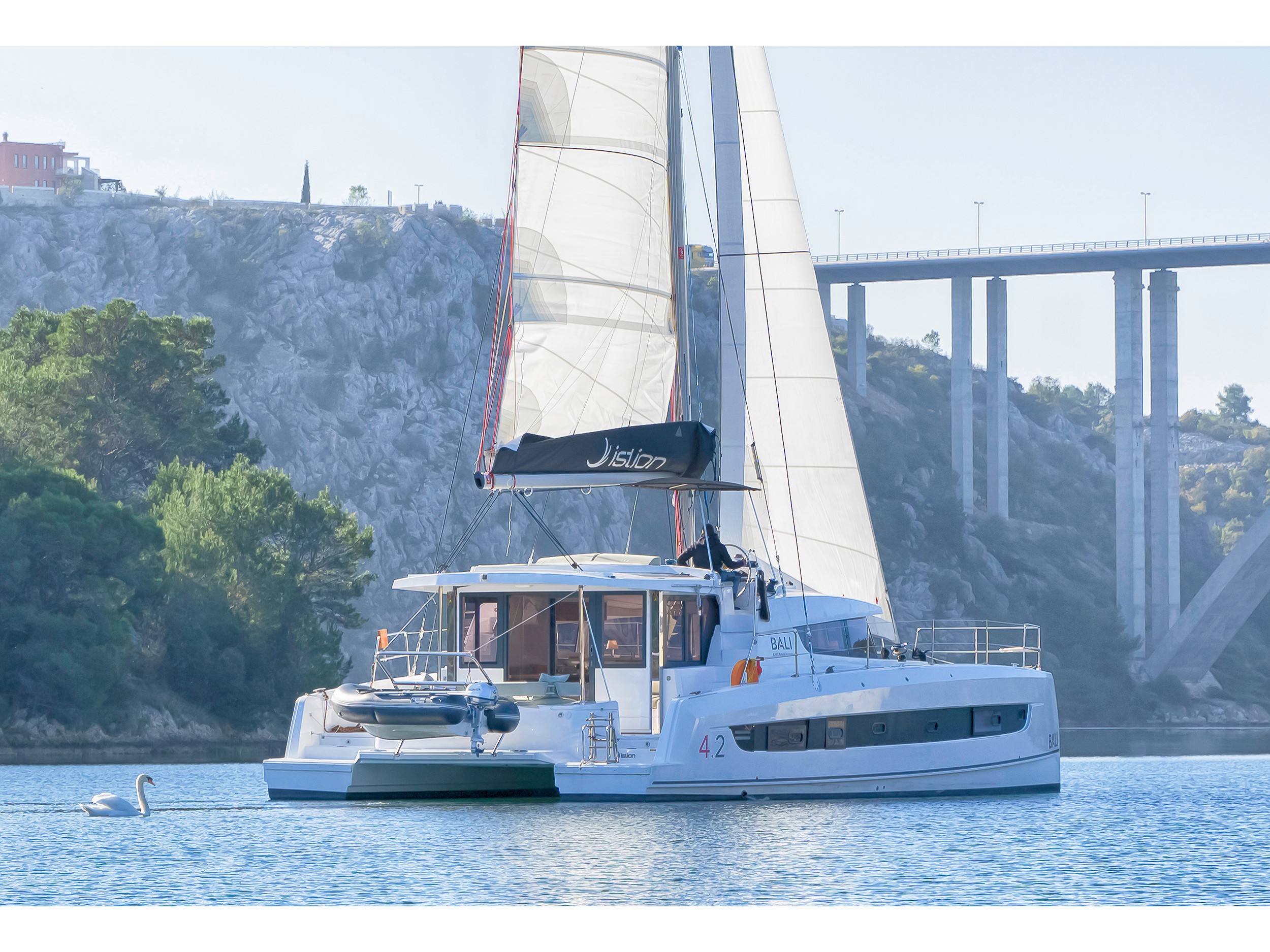
Yes, but with caveats. Most marinas accommodate catamarans up to 8m beam (some up to 9m). The Lagoon 42"s 7.7m beam fits comfortably. But confirm with the charter company — some marinas have older, narrower slips. Charter companies know their home bases and can advise on beam restrictions.
Which is safer: catamaran or monohull?
Both are safe in proper hands. Catamarans have two engines for redundancy and excellent stability. Monohulls have centuries of proven design and seaworthiness. Real safety depends on crew skill, weather decisions, and maintenance. A well-maintained catamaran and a well-maintained monohull are equally safe in the Adriatic.
Do catamarans really stay level while sailing?
Catamarans resist heel much more effectively than monohulls. In moderate wind (15-20 knots), a catamaran might heel 5-10 degrees; a monohull might heel 25-35 degrees. In strong wind, both heel more, but the catamaran stays significantly more level. This is a real, measurable advantage for comfort.
Should I choose based on crew size?
Not directly, but catamaran space matters for larger groups (8+ people). If you"re sailing with four people, a monohull is perfectly comfortable. With six to eight, a catamaran"s extra cabin and deck space becomes valuable. With more than eight, confirm cabin and head count with your charter company — both types have limits.
Related Catamaran and Monohull Reviews
Explore specific yacht reviews to compare individual models:
- Lagoon 42 Catamaran Review — Industry standard, 4 cabins, 7.7m beam
- Lagoon 46 Catamaran Review — Larger catamaran, premium comfort
- Bavaria Cruiser 46 Review — Proven monohull, excellent value
- Lagoon 40 vs 42 Comparison — Choose your catamaran size
- Lagoon 42 vs Bali 4.2 — Catamaran head-to-head
- Elan Impression 40 vs Bavaria Cruiser 41 — Monohull comparison
Browse Charter Yachts in Croatia
Ready to decide? Browse our catamaran and monohull inventories: Lagoon catamarans in Croatia, Bavaria monohulls in Croatia, or all Croatia yachts. Compare availability and current charter rates across the full fleet.
The Bottom Line
There"s no objectively "better" choice in the catamaran vs monohull charter Croatia debate. Choose a catamaran if comfort, stability, and space matter most — and if you"re willing to pay for those advantages. Choose a monohull if budget, traditional sailing feel, and marina flexibility matter most. Both deliver incredible weeks on the Adriatic. The Croatian coast is beautiful from either hull.
Share on
Trending posts
Get exclusive boat deals first
Subscribe to our newsletter to get special members-only deals & discounts as soon as they're available.